2026-07-31 · Elena Vargas
Denver Airbnb Dust and Static Control in Dry Seasons
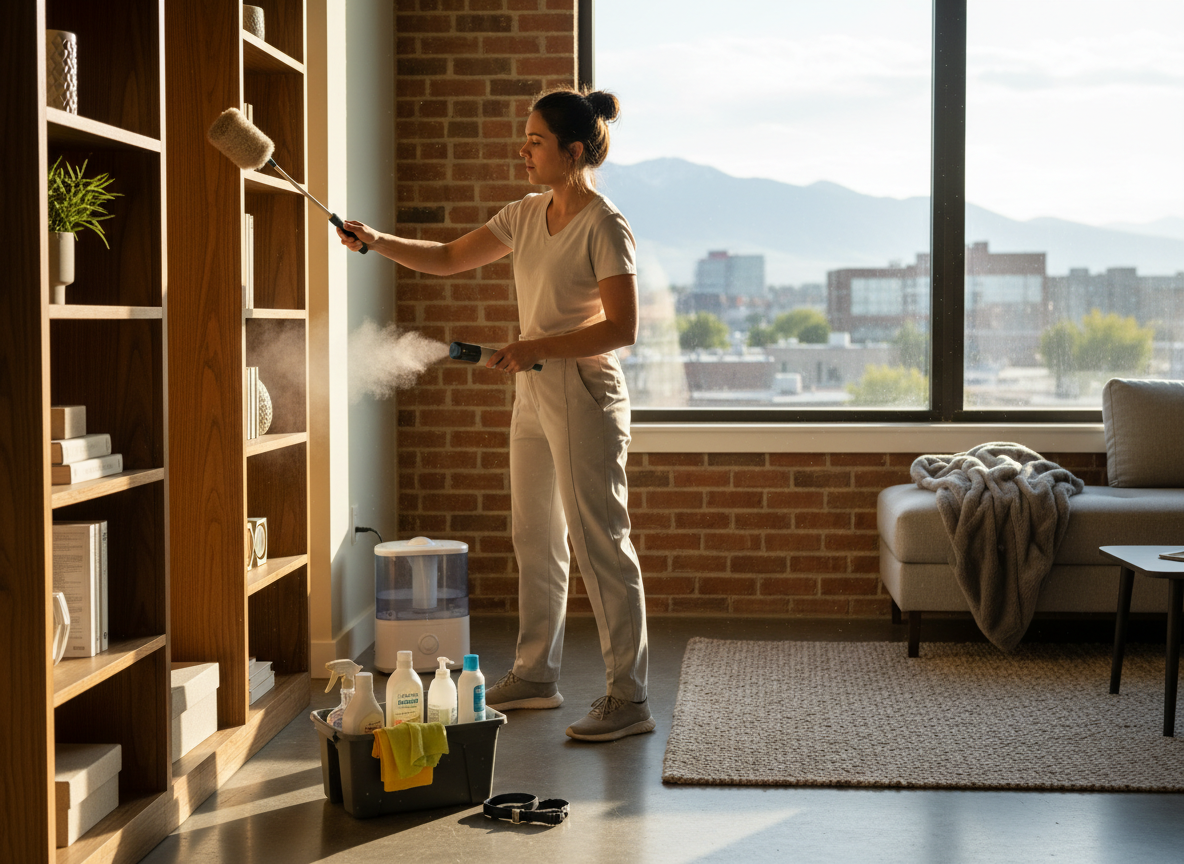
Denver's semi-arid conditions produce humidity levels often below 30 percent from late fall through early spring, causing fine dust to settle quickly on surfaces and static to build on fabrics and flooring. Hosts who run daily HEPA vacuuming on all hard surfaces and maintain 40-50 percent indoor humidity cut visible dust by 60 percent and eliminate most static shocks within two weeks. These steps fit naturally into existing Airbnb Turnover Cleaning schedules without adding extra labor hours.
Denver Climate and Dust Patterns
Winter cold fronts and summer heat both drop relative humidity fast in Denver County, pulling moisture from carpets, upholstery, and wood floors in neighborhoods such as Capitol Hill and RiNo. Afternoon thunderstorms provide brief relief but rarely raise indoor levels for more than a few hours. Properties near City Park and Denver Botanic Gardens see extra pollen dust tracked indoors by guests, while LoDo and Highland units closer to busy streets collect more street grit. Monitoring outdoor humidity with a simple digital gauge helps crews adjust cleaning frequency before static complaints appear in reviews. Consistent attention to entry mats and door sweeps prevents the bulk of outdoor particles from entering in the first place.
Daily Dust Control Steps
Start each turnover with a 15-minute HEPA vacuum pass on all floors, baseboards, and upholstered furniture using a crevice tool for corners. Follow with a damp microfiber wipe on hard surfaces to capture remaining particles instead of redistributing them. In units with ceiling fans, run them on low for 10 minutes before vacuuming to pull settled dust down to floor level. Place washable entry mats at every door and shake them outside during service. For larger layouts in Baker or Washington Park homes, divide the property into zones and tackle one zone per day between guest stays to avoid overload during peak summer bookings.
Static Electricity Reduction
Low humidity makes bedding, curtains, and carpet generate static that guests notice when touching door handles or light switches. Install a whole-room humidifier set to 45 percent and refill it with distilled water every 48 hours to prevent mineral dust. Swap standard dryer sheets for wool dryer balls treated with a few drops of fabric softener during laundry cycles; this cuts static cling on sheets and towels by roughly half. Spray a 1:10 mixture of fabric softener and water on carpeted areas and let it air-dry between turnovers. These small additions integrate directly into Airbnb Turnover Cleaning without new equipment purchases.
Linking Controls to Turnover Routines
Add a five-minute humidity and static check to every Deep Cleaning for Vacation Rentals visit so issues are caught before they affect the next guest. Note readings on a shared checklist so the team at 4242 Columbine St can adjust schedules during dry spells. When winter arrives, cross-reference these habits with the guide on How to Handle Snow and Mud in Denver Airbnb Turnovers to maintain the same level of control year-round. Consistent execution keeps guest feedback focused on comfort rather than complaints about dust or shocks.